Unknown's avatar

ICCF Commends $23.7M Initiative to Combat Poaching & Conflict in Africa

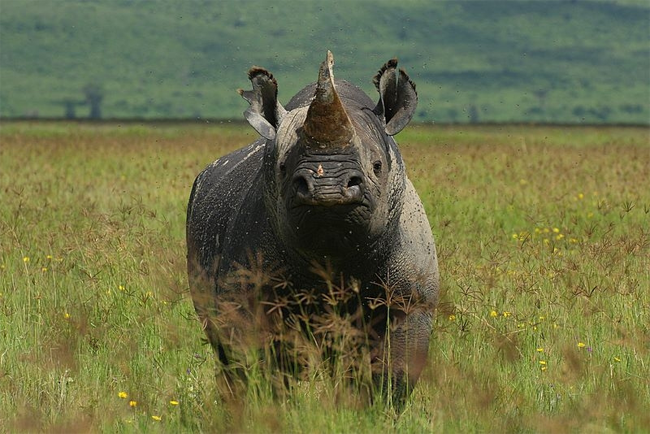
ICCF Commends The Howard G. Buffett Foundation, Nature Conservation Trust and SANParks for Announcing R255 million (USD $23.7 million) Initiative to Combat Poaching & Conflict in AfricaBlack_Rhino_on_Ngorongoro_Crater

March 18, 2014

The Howard G. Buffett Foundation, Nature Conservation Trust and
SANParks Announce Historic R255 Million Commitment to Combat Poaching, Conflict in Africa

Three-year effort will intensify protection of Kruger National Park’s rhino population, and identify successful strategies to address poaching which finances conflict in Africa

JOHANNESBURG, SOUTH AFRICA – The Howard G. Buffett Foundation (HGBF), a private foundation in the United States; the Nature Conservation Trust (NCT), a South African public benefit organization (PBO); and South African National Parks (SANParks) today announced an historic RAND 255 million (USD $23.7 million), three-year initiative to combat rhino poaching in Kruger National Park and test anti-poaching tactics that can be applied in other regions of Africa, where poaching can be a source of funding for armed groups. The announcement was made at the Rosebank office of Standard Bank, which also announced its own support for the initiative by providing favorable banking fees and interest on the funds which they will hold.

The effort in Kruger will create an Intensive Protection Zone (IPZ) using sophisticated detection and tracking equipment and infrastructure on the ground and in the air; elite canine units and highly-trained ranger teams; and improved intelligence gathering and observation and surveillance systems. Kruger is currently home to over 40% of the world’s remaining 22,000 rhinos, the largest single population of rhinos in the world. Since January 2010, 1,383 rhinos have been poached from Kruger National Park, part of a larger assault that resulted in 2,368 rhinos poached in South Africa over the past few years. In some areas of Africa, entire populations of rhino have been eliminated.

Kruger’s poaching problem is fueled mainly by illicit criminal networks in Mozambique, South Africa, and East Asia, but evidence suggests that armed groups elsewhere in Africa derive significant funding from poaching activities. Kruger’s IPZ will also serve as a testing ground to inform targeted efforts to combat poaching in these other African regions.

“SANParks, thanks to the leadership of David Mabunda, and Kruger National Park, under the direction of General Johan Jooste, provide a unique opportunity to test new technology and new ideas within the best operating national parks system on the continent,” said NCT Chairman and HGBF CEO Howard G. Buffett. “This effort joins our foundation’s historic support for conservation with our current focus on conflict mitigation in Africa, particularly in the Great Lakes region.”

“The scale, complexity, and strategic value of this initiative is truly unprecedented for SANParks, and we believe will be transformative in our ongoing efforts to address poaching and the decimation of the rhino population in Kruger National Park,” said SANParks CEO David Mabunda. “More importantly, the lessons we hope to learn and share across SANParks and the continent will, we believe, develop new and more effective ways to combat illicit wildlife trade, particularly where it is financing armed groups.”

The Leadership for Conservation in Africa (LCA), led by its South African-based CEO Chris Marais, will provide advisory and advocacy support for the collaboration.

NCT and HGBF have a long history of support for conservation in Africa. NCT, with 100% of its funding provided by HGBF, created the Jubatus Cheetah Reserve in 2001 and the Ukulima Research Farm in 2007, both located in Limpopo Province, South Africa. Through its direct investments and support for NCT, HGBF has, prior to this announcement, committed over RAND 485 million (USD $45 million) in South Africa for a range of conservation and agriculture development activities including strengthening environmental governance; carnivore research in the Shashe/Limpopo Trans-Frontier Conservation region; preservation of natural resources; cheetah research and regional planning for cheetah conservation; development of agricultural strategies and production of improved seed for smallholder farmers. HGBF has committed an additional RAND 1.9 billion (USD $175 million) in support of its Africa Great Lakes Peace Initiative, which also includes funding for anti-poaching efforts designed to interrupt the capital flow to armed groups.

The Howard G. Buffett Foundation works to improve the quality of life for the world’s most impoverished and marginalized populations. It focuses on three core areas: food security, water security, and conflict mitigation. Based in Decatur, Illinois, the Foundation is led by CEO Howard G. Buffett. Mr. Buffett has been a permanent resident of South Africa since 2007. To learn more about the Foundation visitwww.thehowardgbuffettfoundation.org.

The Nature Conservation Trust was established in 2000 by the Howard G. Buffett Foundation as a non-profit organization and later was converted to a public benefit organization. The Trust has two primary charitable purposes: to conserve nature, restore degraded land, and to help ensure the long term survival of cheetahs and other carnivores in situ; and to support research and improved practices in agriculture for smallholder farmers to reduce food insecurity on the African continent.

South African National Parks manages a system of parks which represents the indigenous fauna, flora, landscapes and associated cultural heritage of the country. The national parks are: Groenkloof, Kruger, Table Mountain, Marakele, Golden Gate, Camdeboo, Mountain Zebra, Addo Elephant, Garden Route National Park (Tsitsikamma, Knysna, & Wilderness), Bontebok, Agulhas, West Coast, Karoo, Namaqua, |Ai-|Ais/Richtersveld, Augrabies, Kgalagadi, Mapungubwe, Tankwa Karoo and Mokala. To learn more visit www.sanparks.org.

Read the Press Release

Find out more about the International Conservation Caucus Foundation.
Unknown's avatar

Terrorists, Tusks and the Ivory Crush

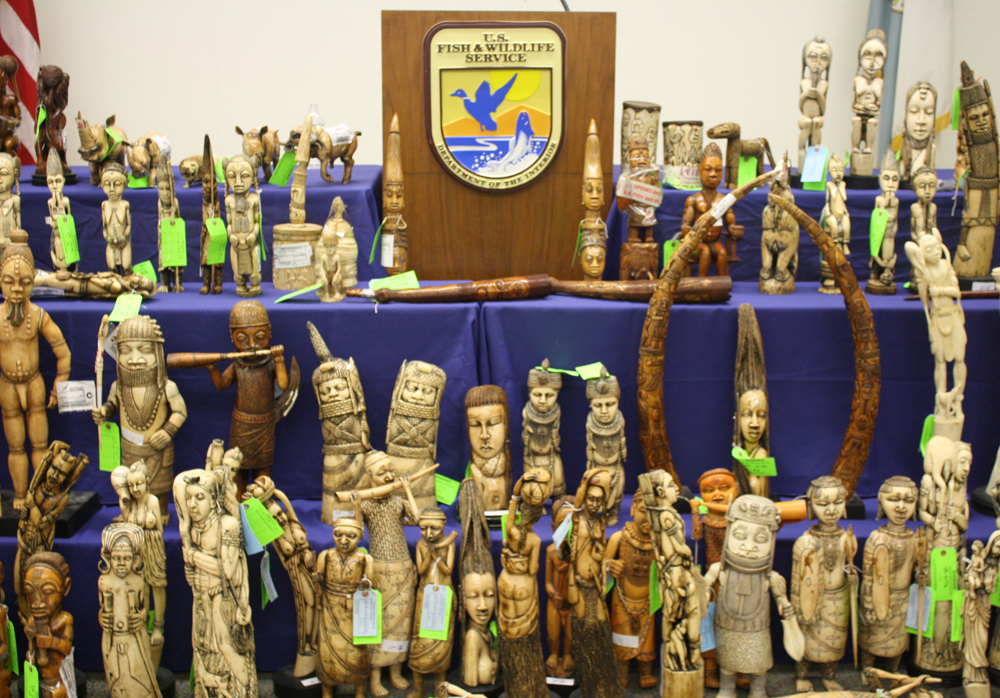
photo: US Fish & Wildlife Service

photo: US Fish & Wildlife Service

Today ivory sells on the black market for about $1500US per pound. Al-Shabab, a Somali splinter cell of al Qaida, raises $600,000 per month from poaching activities. Local African warlords and international crime syndicates fund their own violent and illegal activities through ivory poaching. Any reduction in the supply of legal ivory to growing middle class markets in China will skyrocket prices for illegal supplies, with profit margins for terrorist groups, warlords and criminals escalating correspondingly.

Recently the Obama administration announced that US Fish & Wildlife Service (FWS) would promulgate a rule that would ban ivory sales in the United States. Government agencies around the world have postured with high profile ivory crushes and burns from China to the United States and Kenya. Even Prince William wants to crush the Royal ivory collection in the UK. This week the Administrations’ Advisory Council on Wildlife Trafficking will meet to discuss their strategy to enact  a rule ending legal trade in the US. But will destroying stockpiles of ivory and criminalizing legal trade really stop ivory poaching in Africa? There is no evidence to support that belief.

“The first lesson of economics is scarcity: there is never enough of anything to fully satisfy all those who want it. The first lesson of politics is to disregard the first lesson of economics.” ~Thomas Sowell

While seemingly noble, these measures are largely symbolic and are likely to drive the price of ivory up by creating scarcity. Markets are driven by supply and demand. When the supply is reduced and the demand continues or increases, prices move up. Even the perception of scarcity puts upward pressure on markets. This is all Economics 101, and it applies equally to legal and illegal markets.

The face of ivory poaching in Africa

The face of ivory poaching in Africa

Propaganda in support of the ivory crush theory suggests that eliminating the world’s stock piles of ivory and criminalizing legal trade works to discourage black-market trade; that somehow legal trade provides cover for illegal trade. The opposite effect is far more likely. Without a significant decrease in the demand for ivory, scarcity, even perceived scarcity, will likely drive the price for illicit ivory to all time highs. Black-market trade will become more lucrative than ever. Criminals will be emboldened by the world’s inability to protect elephants in Africa, nor implement a workable strategy to reduce demand in ivory markets.

Instead of crushing valuable stockpiles of ivory in a grand symbolic gesture, sell the ivory in legal markets and use the money for elephant conservation. This is not about writing symbolic checks that are the fodder of photo ops and behind the scenes corruption– but about putting beans and bullets directly on the ground to be used by the rangers who need them. We should use money from legal ivory sales  for the recruitment and training of additional personnel, outfit them with the equipment they need, and deploy them to fight sophisticated poaching rings. Crushing ivory out of existence only increases it’s value on the black market.

Ivory poaching is funding international terrorism. Making it more difficult and more dangerous to kill elephants, while educating  the Chinese to the realities of ivory trade, will mitigate the flow of money from ivory to terrorist activities.

Al-Shabab makes $600,000 per month on poaching and employs child soldiers.

Al-Shabab makes $600,000 per month on poaching and employs child soldiers

Money from legal ivory sales could fund educational programs targeting the Chinese middle class.

Making legal trade illegal and turning good citizens into criminals will make it easier for FWS to make cases against Americans here at home, but it fails to address the hard work of catching poachers and real criminals that are determined to kill every living elephant.

We should utilize the groups that have the most at stake in elephant conservation. Hunting groups, gun and equipment manufacturers, and NGO’s. They all need to step up to the plate and play a larger role in preservation of the species they value. Protecting elephants as a resource that will be available for future generations should be a common goal of all of these interest groups. The focus needs to be on leveraging relationships on the ground in Africa, and empowering small specialized projects that get equipment, supplies, manpower and training where they are needed most. We should be using the legal sale of confiscated ivory to fund putting boots on the ground to undercut poaching.

Additionally, a larger effort needs to go into educating middle class ivory consumers in China. Again, NGO’s funded in part by legal sales of ivory could create a model for education– essentially an “issue campaign” to change the hearts and minds that currently have such an appetite for ivory and a steadfast superstition that tusks grow like human fingernails.

If we insist on going down the primrose path of symbolic conservation gestures that actually aggravate the situation,  while wasting what could be irreplaceable conservation dollars from ivory stockpiles, we fail. We will never address the  fundamentals of supply and demand. Our current course will make it so lucrative and easy for criminals and terrorists to continue their activities that elephant populations could be pushed to the brink.

Funding for elephant conservation is limited. Criminalizing legal trade of ivory at home is foolish, ineffective and distracts from actual conservation. We are running out of time for the usual tortured process of political posturing and the stroking of egos. We need to get resources on the ground and limit markets in short order. Elephants died for the ivory being crushed. Should their deaths be for naught? Use the money from legal sales of ivory to protect the future of elephants for generations to come. Stop the ivory crush.

~~~~~~~~~~~~~~~~~~~~~~~~~~~~~~~~~~~~~~~~~~~~~~~~~~~~~~~~~~~~~~~~~~~~~~~~

WyattP2The ivory crush and other wildlife issues are highly charged and contentious. I specialize in working with clients to employ campaign style tactics to change hearts and minds on vital issues in the wildlife sector. Please follow The Last Word for insight and analysis particular to the 21st century wildlife sector. If you would like to discuss the potential advantages of running a targeted issue campaign, and/or a comprehensive government affairs strategy, please call or email me. ~ Andrew Wyatt

Unknown's avatar

A Caretaker and a Killer: How Hunters Can Save the Wilderness

Reblogged from The Atlantic.

“Hunting is Conservation… No one takes the philosophy of responsible stewardship and species preservation more seriously than the American hunter.” ~Andrew Wyatt

Stereotypes of gun-toting brutes and tree-hugging hippies miss the basic facts about who is protecting nature—and why.
TOVAR CERULLI | MAR 14 2014, 10:12 AM ET

kkirugi/Flickr

kkirugi/Flickr

Excerpted from The Atlantic:

The ideological turf matters far less than the ground beneath our feet—the real places that, once lost, may never be restored.

Hunting and environmental organizations don’t always see eye to eye, of course. Intense controversy has arisen over wolves, for instance. Some environmental groups have argued for continued federal protection under the Endangered Species Act, often citing the ecological value of top-level predators. Some hunting-conservation groups have argued for state management and public hunting, often protesting wolves’ predation on cherished game species such as deer and elk. Other organizations have remained neutral. In some cases, the politicized debate has driven wedges between longtime allies, causing rifts that will not be easily healed.

When clashes occur, it is all too easy to fall back on reductive notions about liberal, elite environmentalists and conservative, redneck hunters—the “greens” versus “the hook-and-bullet crowd.” With partisans on both sides invoking stereotypes and the media portraying hunters and environmentalists as opponents, it is tempting to imagine stark lines between the two.

But such divisions are too simplistic. As it turns out, many predator-conservation advocates are hunters. My tracking instructor Sue Morse, for instance, became a hunter in her 40s as a direct result of studying four-footed hunters. Interested in procuring more of her own food, she was drawn to emulate the animals she appreciated so deeply. Michael Soulé, the father of conservation biology, is also a hunter, as were famed conservationists Aldo Leopold, Olaus Murie, and Sigurd Olson.

 Read more at The Atlantic…


Unknown's avatar

Scimitar-Horned Oryx: The Return to Africa

“Private conservation in Texas is bringing the Scimitar-Horned Oryx back from the brink of extinction. In 2000 this endangerd antelope was declared extinct in the wild. Now Fossil Rim is working hard to return this magnificent animal to it’s native range in north Africa.” ~Andrew Wyatt

Tye Chandler's avatarWords On Wildlife

Scimitar-horned oryx (SHO) were declared extinct in the wild in 2000.  Conservationists, such as Fossil Rim and the Sahara Conservation Fund, are working hard to breed this species and reintroduce SHO into large protected areas in northern Africa.  This species was formerly native to the Sahara Desert and was heavily diminished by overhunting and habitat loss.  Fossil Rim has more than 20 SHO in our herd and has produced six to eight calves during each of the last three years.

RS11599__DO12422

RS3180_ScimitarOryx3 Scimitar-Horned Oryx

 Fossil Rim is also working to support the conservation and propagation of SHO in protected areas in Africa.  In 2007, Fossil Rim sent two scimitar-horned oryx and two addax (a critically endangered species) to Tunisia to join captive herds living in a large protected area that is several thousand hectares in size.  Numerous zoos have sent SHO and addax to Tunisia, and the hope is that someday these…

View original post 303 more words

Unknown's avatar

New Lawsuit Challenges Three Antelope Provision

“An animal rights organization desperate to stop endangered species conservation in Texas has filed suit to block the recently passed 2014 Approporiations Act.” ~Andrew Wyatt

firstforwildlife's avatarFirst For Hunters

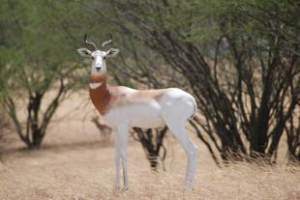
damaGazellefirstforhunters012914 Friends of Animals has just filed yet another lawsuit to thwart conservation of U.S. populations of scimitar-horned oryx, dama gazelle and addax (three antelope).  This latest suit challenges the constitutionality of Section 127 of the 2014 Appropriations Act , passed by Congress and signed by the President in January.  Section 127 directs the Secretary of the Interior to reissue a 2005 regulation that made it unnecessary for U.S. private owners of the three antelope species to apply for and obtain individual permits to allow the hunting of members of their herds.  In 2009, a federal district court determined that the 2005 regulation violated the Endangered Species Act and directed the U.S. Fish and Wildlife Service to withdraw the rule.  Section 127 provides the FWS with new statutory authority to reissue the 2005 rule.

Friends of Animals claims that Section 127 will have an effect on pending litigation and therefore violates…

View original post 122 more words

Unknown's avatar

Is the Wolf a Real American Hero?

Reblogged from The New York Times.

“Can you say trophic cascade? A recent video story narrated by British writer George Monbiot on how wolves transformed the Yellowstone National Park landscape has gone viral of late.  The question of how accurate the touching story actually is has been posed in this New York Times editorial. It demonstrates an unfortunate dynamic of some folks being too quick to believe good story telling, rather than questioning motivations and leveling a critical eye to uncover the truth. Arthur Middleton gives a different account; not the final word, but reason for caution when jumping to emotionally driven conservation conclusions.” ~ Andrew Wyatt

By ARTHUR MIDDLETON | March 9, 2014

Marion Fayolle

Marion Fayolle

Excerpted from The New York Times:

“This story — that wolves fixed a broken Yellowstone by killing and frightening elk — is one of ecology’s most famous. It’s the classic example of what’s called a “trophic cascade,” and has appeared in textbooks, on National Geographic centerfolds and in this newspaper. Americans may know this story better than any other from ecology, and its grip on our imagination is one of the field’s proudest contributions to wildlife conservation. But there is a problem with the story: It’s not true.

We now know that elk are tougher, and Yellowstone more complex, than we gave them credit for. By retelling the same old story about Yellowstone wolves, we distract attention from bigger problems, mislead ourselves about the true challenges of managing ecosystems, and add to the mythology surrounding wolves at the expense of scientific understanding…”

Read more at The New York Times…


Unknown's avatar

The sweet smell of petrichor

“I love the smell of petrichor in the morning– smells like… Africa!” ~Andrew Wyatt

Mark Deeble's avatarMark Deeble

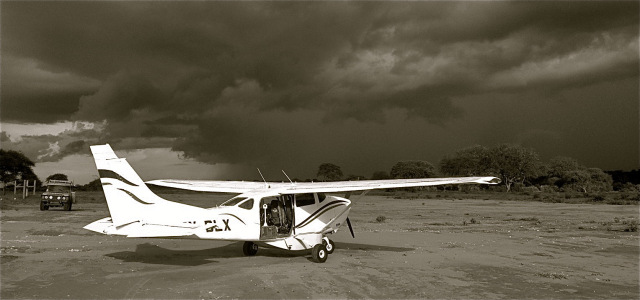
BLX vs thunder storm

A week ago in Tsavo, we had an unseasonal storm of rain. We’d been flying, doors off, searching for the matriarch that we’d not seen for a while. As the cloud thickened and lowered, and dark skeins of rain descended to hide Musinga Hill, we headed back towards the airstrip, lest we get rained out. We landed with minutes to spare. We’d just got the camera off and doors on before the first violent gust arrived that whipped the rudder over, and set the plane rocking on it’s under-carriage. Neither of us cared that the search had been cut short though, because with the wind came the smell of rain – the sweet smell of petrichor.

Everyone has their own favourite smell – it might be that of new-cut grass, the bruised leaves of lemon verbena, freesia flowers or linseed oil.

For anyone that has lived in rural Africa, the…

View original post 1,186 more words

Unknown's avatar

Endangered Species Act lost sight of its mission

Reblogged from Desert News.

“A NEW report from the Endangered Species Act Congressional Working Group has characterized the Endangered Species Act recovery rate as ‘unacceptable.’ The ESA should be a dynamic tool of conservation, not a tool to advance the policies of special interests that FWS is beholden to.” ~Andrew Wyatt

Deseret News editorial
Published: Friday, March 7 2014 12:00 a.m. MST

A male greater sage grouse struts at a lek near Henefer, Sunday, April 16, 2006. Christopher Watkins, Deseret News archives

Summary

A report from the Endangered Species Act Congressional Working Group found the ESA has produced an “unacceptable” recovery rate of 2 percent, and less than 5 percent of the species on the list are actually improving. That’s just not good

When Congress passed the Endangered Species Act, it did so with the intent of preserving animal populations that were facing the possibility of extinction. That’s a noble goal, but the reality of its implementation has been very different from its intent.

A recently released report from the Endangered Species Act Congressional Working Group, which evaluated the effects of the ESA and recommended improvements to the 40-year-old law, found that the ESA has produced an “unacceptable” recovery rate of only 2 percent, and that less than 5 percent of the species still on the list are actually improving. That’s just not good enough.

Read more at Desert News…

Unknown's avatar

Texas Gasses Its Rattlesnakes This Weekend–Maybe for the Last Time

” The Sweetwater Rattlesnake round-up to proceed as planned, but the question of whether Texas will end the practice of ‘gassing’ still hangs in the balance.” ~ Andrew Wyatt

Richard Conniff's avatarstrange behaviors

(Photo: Greg Ward/Getty Images) (Photo: Greg Ward/Getty Images)

Members of the Texas State Parks and Wildlife Commission had a rare opportunity in January to commit an act of political courage. If they’d done it, hundreds of native Texans—and the creatures living around them—might have been spared a needlessly horrifying death this week.

A vote originally scheduled for the commission’s January meeting would have ended the practice of spraying gas fumes into cracks and crevices in the ground to drive rattlesnakes out of their dens. The groggy victims get tossed into bags and delivered to a rattlesnake roundup in Sweetwater, a town of 10,600 about three hours west of Fort Worth, which has made itself notorious with this practice. Because of the non-vote, the roundup will take place this Saturday and Sunday as usual.

The practice of gassing snakes, once common, is now regarded as barbaric even by the state’s other rattlesnake roundups. More than…

View original post 685 more words

Unknown's avatar

Legal Trade Can Save Endangered Wildlife

“The truth is, if they [species] have no economic value, these animals are far more difficult to conserve. This fact is reinforced every day on the ground in Africa when a villager sees more value in protecting his livestock by poisoning a lion than he does in letting the lion live.” – Can Private Conservation Contribute to Species Survival? ~ Andrew Wyatt

Reblogged from the Wall Street Journal.

By ARANCHA GONZÁLEZ
March 2, 2014 6:01 p.m. ET

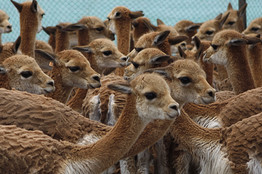
By 1979 vicuñas were almost extinct in the Andes. Now there are more than 400,000.

The United Nations will mark the first official World Wildlife Day on March 3. This is welcome news, because unless a solution to the global poaching problem is found, iconic species such as the tiger, rhinoceros and elephant face extinction within 20 years.At the recent London Conference on Illegal Wildlife Trade, 46 countries and 11 international organizations signed a declaration that sets out a three-pronged approach to protect wildlife. The declaration calls for increasing enforcement of laws against poaching, reducing demand for wildlife products, and the “sustainable utilization” of wildlife.

Vicunas Associated Press

Vicunas Associated Press

While enforcement and demand reduction are necessary and clear, less is known about what sustainable use actually means—and how it can solve the overharvesting and poaching of wild animals and plants.

Combating illegal trade has been the focus of much recent attention. But the real question is how to set up a well-managed legal trade that is sustainably managed and benefits the poor rural communities where many threatened species are found.

Read more at the Wall Street Journal…