Unknown's avatar

Africa’s Anti-Poaching Problem

Reblogged from Foreign Affairs published by the Council on Foreign Relations.

“There is no doubt that commercial activity creates economic incentive to protect and conserve wildlife. What is not clear, is how this aggressive vision for an anti-poaching strategy actually works. Humanely ranching elephants and rhinos for ivory and rhino horn may not be possible at a rate that would satisfy current demand. However, this provocative article continues the conversation of how best to employ commercial conservation to it’s greatest advantage. I highly recommend reading this article if you are interested in real conservation in Africa.” ~Andrew Wyatt
How Wildlife Trade Bans Are Failing the Continent’s Animals
FEBRUARY 5, 2014
Kasterine_AntiPoaching
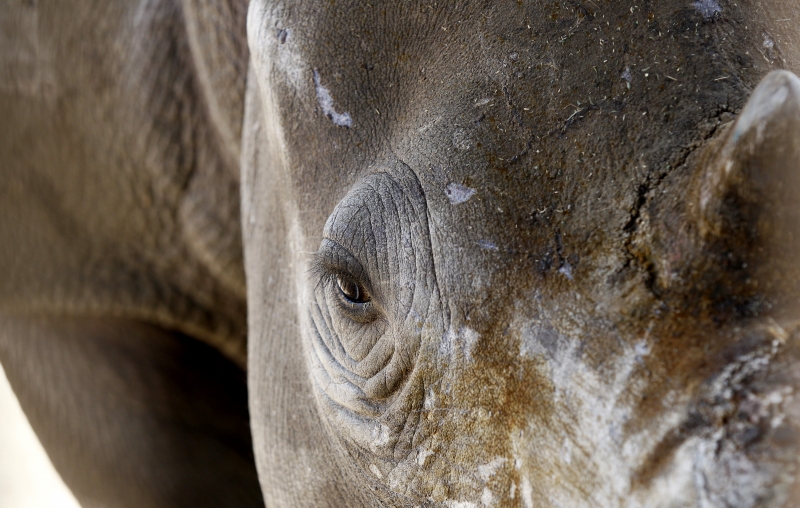
A White Rhino awaits buyers in a pen at the annual auction in the Hluhluwe-Imfolozi national park, September 18, 2010. (Mike Hutchings / Courtesy Reuters)

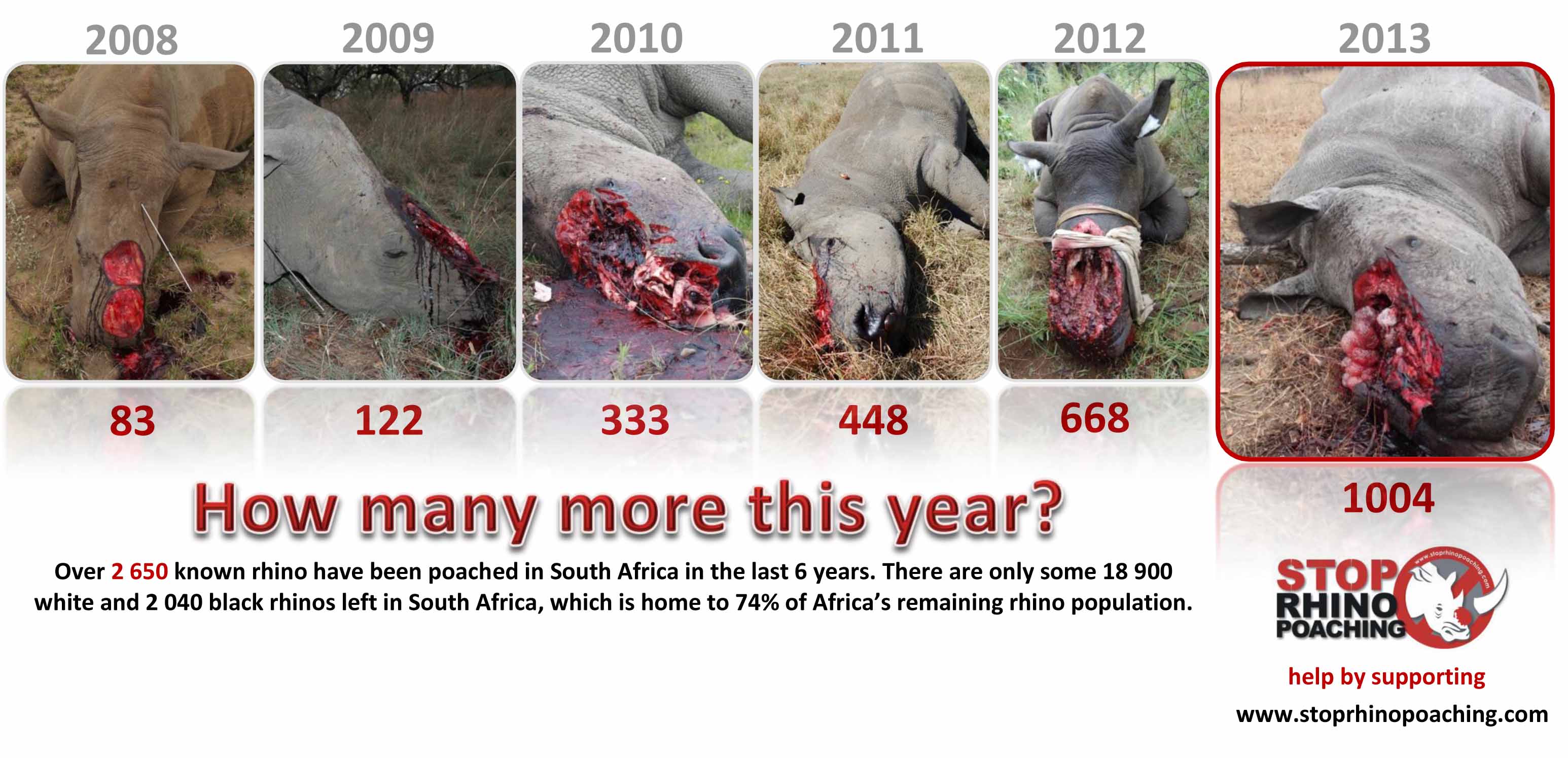
Decades after more than 100 countries agreed to ban the rhinoceros horn trade in 1979, poachers are killing record numbers of the endangered species. In just 2013 alone, they slaughtered some 1,000 rhinos in South Africa, up from 668 in 2012. If the hunting continues at current rates, one of the conservation movement’s most famous mascots could be extinct within the next two decades. And rhinos are not alone. Many other animals — including elephants and tigers — are also facing the prospect of extinction, all in spite of long-standing trade bans.

In South Africa, police and national defense forces have become increasingly engaged in efforts to protect threatened wildlife, and the government has earmarked roughly $7 million in extra funding to ramp up security in its national parks. Yet poaching there has continued, just as it has throughout the continent. Last year alone, poachers killed a total of 22,000 elephants, the majority for tusks that were sold to feed rising demand in Asia.

Through the Convention on International Trade in Endangered Species of Flora and Fauna (CITES), an international agreement among 179 countries, governments can vote to ban the trade of products from species threatened with extinction. But such trade bans are failing in large part because they have run into the same basic problem as the war on drugs. Prohibitions on trading wildlife products such as tusks and timber have ultimately made them more valuable. And criminal organizations have moved in and taken over the market, imposing high costs — through violence and corruption — on weak societies.

In some ways, this is an old story. As the American economist Thomas Schelling has argued, the United States’ prohibition of alcohol in the 1920s advantaged criminals by giving them “the same kind of protection that a tariff gives to a domestic monopoly.” As the demand for alcohol increased, prohibition guaranteed “the absence of competition from people who are unwilling to be criminal, and an advantage to those whose skill is evading the law.” Today, the United States spends an estimated $30 billion annually to combat the drug trade, yet illegal narcotics remain readily available on American streets.

Both the illegal wildlife and drug trades are now worth huge sums, the bulk of which ends up lining the pockets of criminal organizations, corrupt officials, and even terrorist groups. According to the UN Office on Drugs and Crime and the global policing organization Interpol, the illegal drug trade was worth an estimated $435 billion in 2013. Estimates suggest that the illicit wildlife trade, including logging and fishing, is worth around $130 billion — more than three times the size of Kenya’s entire GDP. And the profits have been substantial. Last year, Vixay Keosavang, a wildlife trader from Laos, sold rhino horn at $65,000 per kilo. He bought the horn in southern Africa for one-tenth of that price.

As the money has rolled in, poachers and smugglers have grown more sophisticated, investing in miniature armies. All across Africa, it is increasingly common for park rangers to skirmish with poachers. According to the charity Thin Green Line, poachers in Africa kill some 1,000 park rangers each year. And the fight is far from fair: The U.S. Congressional Research Service has reported that many poachers now use “night vision goggles, military-grade weapons, and helicopters.” By comparison, the rangers are often poorly equipped. And that makes trading in wildlife all the more attractive.

THE PATH TO LEGALIZATION

Conservation groups such as the World Wildlife Fund have long advocated for stiffer sentences and fines to deter poachers and traders. They are right that penalties could be tougher. Last year, an Irish court fined two traffickers just 500 euros ($676) for smuggling rhino horn worth 500,000 euros ($676,600). However, even high penalties do not necessarily deter all types of crime. Drug runners can face the death penalty in Southeast Asia, yet a seemingly endless stream of impoverished people sign up to act as drug mules anyway.

The appetite for illegal wildlife goods, meanwhile, shows no signs of abating. Ever since Asia’s economies took off in the 1990s, demand has soared. The prices of such items as rhino horns have followed, rising from roughly $1,000 per kilo in 1990 to around $65,000 per kilo today. Many Asian consumers believe that when used as a medicine, the horns can help cure cancer and detoxify the body. It does not matter how scientifically dubious such claims may be; they are simply a matter of faith. Just as drug addicts will go to any length for a fix, no matter the cost, those who believe that rhino horn can cure cancer will go to nearly any length to get their medicine. Never mind that such horns are made of the same material as human toenails.

Many buyers in Asia are motivated by prestige as well. In Vietnam and elsewhere, serving bush meat caught in the wild is a status symbol — as is owning elephant tusks, shahtoosh shawls made from endangered Tibetan antelope, and live orangutans as household pets. And such goods derive much of their appeal from being scarce and expensive — making demand for them insensitive to price hikes.

Outright bans, then, are not the answer. For this reason, the South African government plans to propose lifting the ban on trading rhino horn at the next CITES meeting in 2016. South African officials argue that a legal trade would take profits away from criminal syndicates. Just as taxes on cigarettes fund education and health programs in the United States, similar levies would also provide ample funds for campaigns to combat poaching and reduce demand. Meanwhile, regular de-horning of the animals would increase the global horn supply, lowering prices and the attraction of poaching. Rhinos produce nearly one kilogram of horn each year, which can easily be harvested through a simple veterinary procedure. Farming the animals ethically, moreover, would allow consumers to demand horn products from sustainably managed sources.

To legalize the rhino trade, South Africa will need a two-thirds majority among CITES members. It can expect to run into stiff opposition from a group that will likely include the United States, Kenya, and a number of European countries. Animal welfare groups will also push hard against legalization. That said, CITES already permits the trading of live rhinos and some limited hunting. In January, the Dallas Safari Club auctioned the right to hunt an old rhino in Namibia for $350,000. (One bidder withdrew his offer of $1 million — money that could have gone toward protecting rhinos — after receiving a death threat from an animal welfare extremist.) Such hunting fees can provide a critical source of revenue; in Namibia, they finance one-third of the government’s wildlife protection budget.

Peru embarked on a similar legalization process in 1979. To save the vicuña — a camelid that resembles a small llama — from extinction at the hands of hunters who prized its fine wool, the Peruvian government gave local communities the right to shear and market the animal’s wool. Now local herders protect the animals and also earn money from sale of their wool. Since then, the country’s vicuña population has grown from 5,000 animals — on the verge of extinction — to more than 200,000 today. CITES approved the policy in 1994.

Such a process of legalization, however, would not necessarily be a magic bullet. For a legal trade to work, governments would have to enforce a tight system of export permits and harvest quotas. Policing would still be needed to protect animals and forests. The success of a legal trade would also hinge on animal reproductive rates and the level of poverty in rural areas where the incentives to poach are high. But policymakers should heed the lessons of the drug wars. Bans fail because borders remain porous and officials corrupt. There is no wall high enough to counteract enormous financial rewards for breaking the rules to feed a voracious market.

Like the drug wars, restrictions on the animal trade reflect not only policy positions but also certain moral beliefs. Yet moralizing conservation organizations are typically based in wealthy countries and overlook the huge financial burdens that enforcement imposes on poor countries with already scarce resources. Such groups also minimize the potential benefits of taxing the wildlife trade, in the form of precious funds that would otherwise go to criminal outfits. Individual countries, then, will also have to make some informed decisions on their own. They would do well to consider what the United States has achieved in its war on drugs — now in its fourth decade.

Unknown's avatar

Break the Link Between Terrorism Funding and Poaching

Reblogged from the Washington Post.

“The connection between terrorism and poaching… A must read for those interested in rhino and elephant conservation.” ~ Andrew Wyatt

By Johan Bergenas and Monica Medina, Published: January 31

Johan Bergenas is deputy director of the Managing Across Boundaries Initiative at the Stimson Center, a nonprofit and nonpartisan think tank that studies peace and security challenges around the world. Monica Medina is a former special assistant to U.S. defense secretaries Leon Panetta and Chuck Hagel.Elephant

There is a new threat in the terrorist hotbed of Africa, and the U.S. military can do much more to combat it. Poaching of endangered elephants and rhinos has become a conservation crisis, and profits from wildlife crimes are filling the coffers of terrorist organizations. The twin crises should be cause for alarm for military leaders, not just conservation groups. They need to start working together before it is too late.

In the past two years, about 60,000 elephants and more than 1,600 rhinos have been slaughtered by poachers, according to reports from the Wildlife Conservation Society, theInternational Union for Conservation of Nature and others. About a thousand park rangers have died in the past decade defending the animals.

In 2014 there have already been 86 rhinos poached.

In 2014 there have already been 86 rhinos poached.

Illegal wildlife trade generates an estimated $19 billion a year — more than the illicit trafficking of small arms, diamonds, gold or oil. A July Congressional Research Service report found that a rhino horn is worth more than $50,000 per kilogram on the black market — more than gold or platinum. Sadly, poaching elephants and rhinos in Africa is easy money for terrorists, and they are cashing in.

One Elephant Action League undercover investigation in Kenya concluded that illegal ivory funds as much as 40 percent of the operations of al-Shabab, the group behind the November attack at a Nairobi shopping mallwhere 60 people were killed. The former director of the Kenyan Wildlife Service and theU.N. secretary general have drawn similar links between crime against wildlife and al-Shabab, al-Qaeda and the notorious Lord’s Resistance Army.

Last May, President Obama called for a new strategy to fight al-Qaeda and its affiliates. To be effective, these counterterrorism plans must engage not only African defense leaders but also conservation and development leaders. U.S. military plans for Africa should include ending elephant and rhino poaching to cut off a key source of funds for al-Qaeda and other terrorists.

A high-level summit on wildlife crimes, organized by the British government, Prince Charles and Prince William, is scheduled to take place this month in London. It is the perfect place to call for a new partnership between the defense and conservation communities.

As Obama’s national security team plans its next steps, it can follow Hillary Clinton’s lead. Before stepping down as secretary of state, Clinton commissioned an intelligence review of the impact of wildlife trafficking on national security. Completed last summer, the review prompted Obama to sign an executive order creating an interagency task force to develop an anti-poaching strategy. Due out this year, the strategy should include a greater military role in responding to this growing challenge.

Last year Congress gave the Pentagon permission to combat the Lord’s Resistance Army’s poaching and human-trafficking activities. That authority should be expanded to cover all terrorist groups, including al-Shabab.

Even without specific direction from Congress, the Defense Department and intelligence agencies should work with conservation groups to combat poaching, using new and inexpensive technologies to detect and deter terrorist activities and traffickers. Drones, satellite imagery, tracking devices and other high-tech tools could transform the fight to save elephants and rhinos, cheaply and effectively starving terrorists of the easy money they gain from wildlife crimes. Already, some African countries are asking for such tools.

Top U.S. defense officials should routinely discuss wildlife trafficking in meetings with African military leaders. The U.S. military’s post-Afghanistan plans must explicitly include poaching in Africa and illegal trafficking of wildlife as new “fronts” in the war on terror. Using technology to detect and deter poachers is a much less expensive way to fight terrorists than deploying Special Operations forces — and less dangerous to U.S. troops.

Finally, private-sector security and technology companies should be encouraged to work with African governments to deploy sensors, radars, unmanned aerial vehicles, satellites and other sophisticated data-gathering and detection systems. These types of defense technologies are needed to bolster borders, ports, roads, energy facilities and other economic infrastructure in Africa. Over the next few decades, the market for this infrastructure and societal security capacity is estimated to be at least $60 trillion, according to reports by McKinsey and others. By working now to protect African economic infrastructure, which includes endangered elephants and rhinos, technology companies could reap huge financial and public relations rewards.

Security technology, military capacity and market incentives are all waiting to be deployed to defeat terrorists and save wildlife in Africa — a huge potential win-win. Here’s hoping that Prince Charles and Prince William use this month’s summit to publicly call on military and industry leaders to join the fight to conserve rhinos and elephants.

Unknown's avatar

To Boldly Go Where No Continent Has Gone Before

Reblogged from the IUCN Blog: The Inside Track on Global Conservation by John Linnell, Senior Scientist at the Norwegian Institute for Nature Research.

“Some field perspective on the future of large carnivores from a member of IUCN’s Large Carnivore Initiative for Europe.” ~ Andrew Wyatt

Posted By IUCN |  January 28th, 2014 at 9:23 am |

Last week the kids and I found a wolverine track in the snow, just a few kilometres from my home. The sun was shining, the air was crisp and life suddenly felt different. The silent forest around me became transformed, from a bland backdrop to a dynamic living ecosystem. The encounter was unexpected, a rarity, a treasure; something that transformed just another family outing to “the day we saw that wolverine track”.

As both a scientist and a conservationist I have worked with large carnivore related issues for almost my entire professional life. Studying their prey (roe deer), studying the predator species themselves (including Eurasian lynx, leopards and jaguars), and studying their interactions with people, has taken me to study sites all across Europe, from the Barents Sea to the Adriatic, and beyond to India and Brazil.

Large carnivores are not an easy career path. For the scientist part of me, they are difficult and expensive to study. Working on rodents would certainly have allowed me to gain more scientific kudos. For the conservationist part of me they are associated with a constant round of challenges and conflicts. So why do I do it?

Gaupe_JlinnellFascination is clearly a major part of the answer. The more I learn about how these animals live their lives the more I appreciate them as masterpieces of evolutionary adaptation. They also trigger some emotional responses deep inside.

The combination of grace, power, silence, resilience and adaptability in such a beautiful packaging can only induce a sense of awe. These animals demand your respect simply by looking at you. They are also truly wild.

Completely independent of us humans, unapologetic about their actions, their persistence in our modern urbanised world provides a refreshing reminder that there is still some wildness left in nature. Predators above all other species remind us that nature is still something of a dynamic process and made up of interactions rather than just being static scenery. The idea that nature is something bigger than us humans and that it still not tamed provides a refreshing tonic to human arrogance and egotism.

However, many of these characteristics are also the source of conflicts. The sources of my fascination can easily become another person’s frustrations or fears. Predators don’t always make easy neighbours, and many rural people living in their proximity experience very real problems.

Working for the conservation of these species involves confronting these conflicts and trying to find ways to minimise them. And the challenge of responding to this is probably my second motivation to work with these species. The challenge is even greater considering that most of my work is in Europe. Europe is a crowded continent, with 500 million people, and no true wilderness areas. There is no “over there” with more space. If we want large carnivores, they have to be “here”; in the same landscape where people live, work and play.

Integrating these species into the fabric of our modern landscape is probably the greatest example of land sharing that has ever been attempted in conservation. The Large Carnivore Initiative for Europe, of which I am a member, is trying to find ways to facilitate this integration of large carnivores into multi-use landscapes that simultaneously provide for the needs of human food production, recreation and biodiversity conservation.

And judging by present trends, the carnivores are succeeding, although there is still a long way to go. Many conflicts persist, and some are escalating. Finding solutions is going to require patience, ingenuity and a willingness to make compromises. Although research can provide some guidance, there is going to be a lot of trial and error because quite simply this experiment has never been tried before. For almost the entirety of human history we have been at a state of war with these species. We are now trying to find a way to coexist with them, although nobody knows how this coexistence is going to look in the end. Who could resist being a part of such a process?

Unknown's avatar

Texans Say Gassing Rattlesnakes Not Really Fun For Entire Family

Sweetwater Rattlesnake Roundup “gassing” practices likely to be banned by Texas Parks and Wildlife Commission.

Richard Conniff's avatarstrange behaviors

UPDATE:  The Parks and Wildlife Commission last night pulled the gassing issue off the agenda for tomorrow’s meeting. No reason given.  The commission expects to hear the issue at its next meeting on March 27, a few weeks AFTER the Sweetwater Roundup.  Meanwhile, keep your comments coming (see below).

My latest, for Takepart:

Here’s an entertaining outdoorsy idea for springtime in Texas: Fill a garden sprayer with gasoline, and go around spraying the fumes into the cracks, crevices, sinkholes, and caves where rattlesnakes make their dens. Do it early in March, when the snakes are just drowsily waking up from their winter hibernation and too helpless to defend themselves.

Then as the snakes escape to the surface to flee the noxious fumes, pick them up, toss them in a sack, and bring them to the “world’s largest rattlesnake roundup,” held on March 8 and 9 in Sweetwater, Texas.  It’s…

View original post 875 more words

Unknown's avatar

CAN TROPHY HUNTING ACTUALLY HELP CONSERVATION?

CAN TROPHY HUNTING ACTUALLY HELP CONSERVATION? January 15, 2014

Re-blogged from Conservation Magazine: http://conservationmagazine.org/2014/01/can-trophy-hunting-reconciled-conservation/comment-page-1/#comment-22621

Can trophy hunting ever be a useful tool in the conservationist’s toolbox? On the surface, the answer would appear obvious. It seems as if the killing of an animal – especially an endangered one – for sport is directly contradictory to the goal of ensuring the survival of a species. The question has been asked again following the auction last Saturday night of the right to hunt an endangered black rhinoceros (Diceros bicornis) in Namibia. And the answer, as usual, is more complicated.

The permit was sold for $350,000, well above the previous high bid for a permit in that country, $223,000. While the Dallas Safari Club had the dubious distinction of being the first organization to hold such an auction outside of Namibia itself, it’s fairly unremarkable and actually quite common for an African nation to sell permits for trophy hunting, even for endangered species. Indeed, both Namibia and South Africa are legallypermitted by the Convention on International Trade in Endangered Species (CITES) to sell five permits for the hunting of adult male black rhinos each year.

And it’s not just rhinos. For example, a 2000 report from TRAFFIC, an organization that works with the WWF, IUCN, and CITES to track the international trade of wildlife, describes how Namibia alone was the site of almost 16,000 trophy hunts that year. Those 16,000 animals represent a wide variety of species – birds, reptiles, mammals, and even primates – both endangered and not. They include four of the so-called “big five” popular African game: lion, Cape buffalo, leopard, and rhinoceros. (Only the elephant was missing.) The hunters brought eleven million US dollars with them to spend in the Namibian economy. And that doesn’t include revenue from non-trophy recreational hunting activities, which are limited to four species classified as of “least concern” by the IUCN: Greater Kudu, Gemsbok, Springbok and Warthog.

The issues here are complex and highly politicized. There are several questions that science can’t help address, primary of which is whether or not the money raised from the sale of hunting permits is used for conservation, something often promised by hunting tour operators. But empirical research can help to elucidate several other questions, such as whether hunting can ever help drive conservation efforts.

In 2006, researcher Peter A. Lindsey of Kenya’s Mpala Research Centreand colleagues interviewed 150 people who either had already hunted in Africa, or who planned to do so within the following three years. Their findings were published in the journal Animal Conservation. A majority of hunters – eighty-six percent! – told the researchers they preferred hunting in an area where they knew that a portion of the proceeds went back into local communities. Nearly half of the hunters they interviewed also indicated that they’d be willing to pay an equivalent price for a poorer trophy if it was a problem animal that would have had to be killed anyway.

Lindsey’s team also discovered that hunters were more sensitive to conservation concerns than was perhaps expected. For example, they were less willing to hunt in areas where wild dogs or cheetahs are illegally shot, in countries that intentionally surpass their quotas, or with operators who practice “put-and-take hunting,” which is where trophy animals are released onto a fenced-in property just before a hunt. Together this suggests that hunters were willing to place economic pressure on countries and tour companies to operate in as ethical a manner as possible. Approximately nine out of every ten hunters said they’d be willing to hunt in places that were poor for wildlife viewing or which lacked attractive scenery. That is, they said that they were willing to hunt in areas that would not have otherwise been able to reap an economic benefit from ecotourism.

It’s encouraging that trophy hunters seem willing to take conservation-related issues into consideration when choosing a tour operator, but it is possible that they were simply providing the researchers with the answers that would cast them in the best light. That’s a typical concern for assessments that rely on self-report. Better evidence would come from proof that hunting can be consistent with actual, measurable conservation-related benefits for a species.

Is there such evidence? According to a 2005 paper by Nigel Leader-Williams and colleagues in the Journal of International Wildlife Law and Policy the answer is yes. Leader-Williams describes how the legalization of white rhinoceros hunting in South Africa motivated private landowners to reintroduce the species onto their lands. As a result, the country saw an increase in white rhinos from fewer than one hundred individuals to more than 11,000, even while a limited number were killed as trophies.

In a 2011 letter to Science magazine, Leader-Williams also pointed out that the implementation of controlled, legalized hunting was also beneficial for Zimbabwe’s elephants. “Implementing trophy hunting has doubled the area of the country under wildlife management relative to the 13% in state protected areas,” thanks to the inclusion of private lands, he says. “As a result, the area of suitable land available to elephants and other wildlife has increased, reversing the problem of habitat loss and helping to maintain a sustained population increase in Zimbabwe’s already large elephant population.” It is important to note, however, that the removal of mature elephant males can have other,detrimental consequences on the psychological development of younger males. And rhinos and elephants are very different animals, with different needs and behaviors.

Still, the elephants of Zimbabwe and the white rhinos of South Africa seem to suggest that it is possible for conservation and trophy hunting to coexist, at least in principle. It is indeed a tricky, but not impossible, balance to strike.

It is noteworthy that the Leader-Williams’ 2005 paper recommended that legal trophy hunting for black rhinos be focused mainly on older, non-breeding males, or on younger males who have already contributed sufficient genetic material to their breeding groups. They further suggested that revenues from the sale of permits be reinvested into conservation efforts, and that revenues could be maximized by selling permits through international auctions. Namibia’s own hunting policy, it turns out, is remarkably consistent with scientific recommendations.

Even so, some have expressed concern regarding what the larger message of sanctioned trophy hunts might be. Could the possible negative consequences from a PR perspective outweigh the possible benefits from hunting? Can the message that an auction for the hunting of an endangered species like the black rhino brings possibly be reconciled with the competing message that the species requires saving? This question is probably not one that science can adequately address.

However, it might just be worth having a quick look at some numbers. 745 rhinos were killed due to illegal poaching in 2012 in Africa, which amounts to approximately two rhinos each day, mostly for their horns. In South Africa alone, 461 rhinos were killed in just the first half of 2013. Rhino horns are valued for their medicinal uses and for their supposed cancer-curing powers. Of course, rhino horns have no pharmacological value at all, making their harvest even more tragic. The five non-breeding rhinos that Namibia allows to be hunted each year seem paltry in comparison, especially since they are older males who can no longer contribute to population growth.

I don’t understand the desire to kill a magnificent animal for sport, even if the individual is an older non-breeding male. The sale of the right to kill an animal for a trophy surely reflects the value that animal lives hold in at least some corners of our society: that killing an animal for fun isn’t wrong, as long as you can afford it. It is right to worry about the sort of message that sends.

But if an endangered species as charismatic as the black rhinoceros is under such extreme threat from poaching, then perhaps the message that the species needs saving has a larger problem to address than the relatively limited loss of animals to wealthy hunters. The real tragedy here is that the one rhino that will be killed as a result of Saturday’s auction has received a disproportionate amount of media attention compared to the hundreds of rhinos lost to poaching each year, which remain largely invisible. And while there remains at least a possibility that sanctioned trophy hunts can benefit the black rhino as they have for the white rhino, there is only one possible consequence of continued poaching. It’s one that conservationists and hunters alike will lament. – Jason G. Goldman | 15 January 2014

Sources: Leader-Williams N., Milledge S., Adcock K., Brooks M., Conway A., Knight M., Mainka S., Martin E.B. & Teferi T. (2005). Trophy Hunting of Black Rhino: Proposals to Ensure Its Future Sustainability,Journal of International Wildlife Law & Policy, 8 (1) 1-11. DOI:

Lindsey P.A., Alexander R., Frank L.G., Mathieson A. & Romanach S.S. (2006). Potential of trophy hunting to create incentives for wildlife conservation in Africa where alternative wildlife-based land uses may not be viable, Animal Conservation, 9 (3) 283-291. DOI: 

Leader-Williams N. Elephant Hunting and Conservation, Science, 293(5538) 2203b-2204. DOI: 

Photo: Male black rhino and calf, Karl Stromayer/USFWS. Public domain.

Unknown's avatar

A Trophy Hunt That’s Good for Rhinos

This is a very insightful look at the practicalities of Black Rhino conservation. It is definitely worth reading!

Richard Conniff's avatarstrange behaviors

My latest, for The New York Times:

Let’s stipulate up front that there is no great sport in hunting a black rhinoceros, especially not in Namibia’s open countryside. The first morning we went out tracking in the northern desert there, we nosed around in vehicles for several hours until our guides spotted a rhino a half mile off. Then we hiked quietly up into a high valley. There, a rhino mom with two huge horns stood calmly in front of us next to her calf, as if triceratops had come back to life, at a distance of 200 yards. We shot them, relentlessly, with our cameras.

Let’s also accept, nolo contendere, that trophy hunters are “coldhearted, soulless zombies.” That’s how protesters put it following the recent $350,000 winning bid for the right to trophy hunt a black rhino in Namibia. Let’s acknowledge, finally, that we are in the middle…

View original post 811 more words

Unknown's avatar

Pythons, Politics, Rumor & Controversy: Clarification on the Constrictor Rule

This article has been re-posted from the US Herpetoculture Alliance at http://usherp.org/?p=3137

The Thanksgiving notification given to the Office of Information and Regulatory Affairs (OIRA) by US Fish & Wildlife Service (FWS) that there would be another step toward the finalization of the Constrictor Rule in early 2014 has turned the herpetoculture industry on its ear. Confusion is rampant in the community. Accusations have been leveled as to responsibility, and the reptile and pet industry trade associations are scrambling trying to effect damage control. But the situation is not nearly as complicated as some would make it out to be.

photo: USGS- Green Anaconda

photo: USGS- Green Anaconda

At stake here is the trade in large constricting snakes that have been slated for addition to the Injurious Wildlife List of the Lacey Act. In 2011 FWS proposed a rule to add nine constricting snakes to the Injurious Species List. The trade in these nine species was estimated to be in excess of $100 million annually, potentially making the rule fall into the “major” rule classification which would mandate that the rule making process be rigorous and subject to information quality standards.

Subsequently, FWS published a partial rule in the Federal Register in January 2012; listing four of the proposed nine snakes on the injurious list, and holding the remaining five out as continuing to be “under consideration.” Since the rule was published USARK, PIJAC and US Herpetoculture Alliance have gone back and forth to Washington DC discussing further finalization of the ‘Constrictor Rule’ in order to remove the onus of the “under consideration” designation from the remaining five snakes that were not listed. The argument was this designation was tantamount to a de-facto listing and was destroying legal trade.

US Fish & Wildlife Service Seeks To Add More Snake As Injurious Wildlife

US Fish & Wildlife Service Seeks To Add More Snake As Injurious Wildlife

Fast forward to Monday, December 2, 2013. The US Herpetoculture Alliance was made aware that FWS had notified OIRA of it’s intention to finalize in full, or in part, the listing of the remaining five snakes still “under consideration” as a part of the ‘Constrictor Rule’. As reported, the notification abstract published last week indicated: “We are making a final determination on the listing of five species of large constrictor snakes as injurious wildlife under the Lacey Act: Reticulated python, DeSchauensee’s anaconda, green anaconda, Beni anaconda, and boa constrictor. Four of the nine proposed species were listed in 77 FR 3330. This rule will determine the status of the remaining five species under the same RIN.” ~ US Fish & Wildlife Service, December 2013

In the wake of this discovery we began to further research the FWS/ OIRA records over the last year. We found an even more ominous notification from July 2013 that no one had ever reported on: “We are making a final determination to list four species of large constrictor snakes as injurious wildlife under the Lacey Act: Reticulated python, DeSchauensee’s anaconda, green anaconda, and Beni anaconda. The boa constrictor is still under consideration for listing. Four of the nine proposed species were listed in 77 FR 3330. This rule will list four more under the same RIN. One more species will remain under consideration for listing under the same RIN.” ~ US Fish & Wildlife Service, July 2013

Both of these notices are part of the public record. They are not privileged information. They are available to anyone who looks for them. Neither notice is subject to interpretation. They are both the exact language used by FWS. Please follow the links and read them for yourself.

“Three things cannot be long hidden: the sun, the moon, and the truth.” ~ Buddha

The reality is that this is not super secret national security stuff. It is all public record. FWS has sent clear signals that they intend to finalize the ‘Constrictor Rule’ very soon; probably by February 2014. What is also very clear is that, according to their own notice, they will likely add reticulated pythons and the three remaining anacondas to the Injurious Wildlife list of the Lacey Act; while continuing to leave boa constrictors “under consideration” for future listing.

photo: USGS- Boa Constrictor

photo: USGS- Boa Constrictor

The biggest question in our mind is whether FWS will actually stop short of listing boa constrictor. We think that they will not include boa constrictors in this action, but they can do whatever they want, and publish whatever they want. They are NOT restricted by the notices they have made a part of the public record. The Herp Alliance truly hopes that FWS will decide NOT to list any more snakes. We will not know for sure until FWS publishes the final rule in the Federal Register.

In 2012 the “rumor” circulating among Washington insiders was that only two snakes would actually get listed in the final rule. As you know four were listed. Today our best guess is that four of the remaining five will get listed; with reticulated pythons being added to the list and boas escaping for the time being. We sincerely hope it will not be all five that get listed. Our endeavor is to make the best information available to the herpetoculture community. We hope this clarifies some of the confusion.

Unknown's avatar

Will Hunting Save Lions From Extinction?

african_lion_king-wideAfrican lions are one of the most charismatic species on the planet. Images of the King of the Jungle are etched deeply into our collective conscience. The debate on how best to conserve lions has been stirred anew with a recent Twitter post by TV hostess Melissa Bachman who killed a “trophy” lion while on safari in Africa. The image of a rifle-toting Bachman posing over the carcass of a dead lion offended activists and animal lovers alike. However, Twitter hype aside, the hunting/conservation of African lions is a controversial topic that begs a thorough understanding of the facts.

In 2011 US Fish & Wildlife Service (FWS) was petitioned by animal rights activists  to add African lions to the Endangered Species list, sharpening the divide of an already philosophically polarized conservation community. Contradicting the underlying premise of the petition, at a recent lion workshop hosted by FWS, three experts on African lions agreed that the lion, in their opinion, is not currently in danger of extinction. The International Union for Conservation of Nature (IUCN), the central body in conservation for the African lion, currently lists lions as “vulnerable” on their Red List of Threatened Species.

All agree that populations of lions have declined significantly. According to a study authored by Professor Stuart Pimm of Duke University in 2012, about 75 percent of Africa’s savannahs and more than two-thirds of the lion population once estimated to live there have disappeared in the last 50 years. There are likely between 32,00 and 35,000 free ranging lions on the African continent today. According to professor Pimm, “massive land-use change and deforestation, driven by rapid human population growth” is the primary reason for the decline of the lion.

lions-550Sixty percent of all lions harvested in Africa are destined for trophy rooms in the United States. Proponents of an Endangered Species listing claim the issue is a “no brainer.” Allowing hunters to harvest lions and export trophies back to the US sends the wrong conservation message. They say lions would be best conserved by blocking access to American hunters, thereby reducing pressure on lion populations. Jeff Flocken of the International Fund for Animal Welfare (IFAW), the group spearheading the petition to list lions on the Endangered Species Act (ESA), wrote, “Why should anyone spend money to protect an animal that a wealthy American can then pay to go kill?” Mr Flocken characterizes his argument as common sense, but acknowledges that, habitat loss and human-lion conflict, not hunting, are the primary causes of the lions’ disappearance from Africa.

“As human-lion contact increases, so does human-lion conflict, resulting in reductions in lion numbers (through poisoning, trapping and shooting) and lack of support for lion conservation among local communities.” ~ IUCN SSC Cat Specialist Group

It is absolutely essential that local communities identify the presence of lions as a direct benefit to them. Reducing human-lion conflict is critical to conservation success. According to Dennis Ikanda, of the Tanzania Wildlife Research Institute’s Kingupira Research Centre, his country generated $75 million in lion hunting from 2008 to 2011. Opponents of an Endangered Species listing assert that trophy hunting is the only thing standing between the lions and extinction. Although those claims may seem counter intuitive, the money generated by hunting is being plowed back into the local economy, into conservation measures and into protecting lions from poaching. Hunting advocates say the only chance for survival of the lions is management as a valuable and sustainable natural resource.

Melissa Simpson of Safari Club International Foundation wrote in an opinion piece for the National Geographic Society, “If the (FWS) were to take regulatory action and put the African lion on the Endangered Species list, it would be in spite of the overwhelming scientific evidence to the contrary. Such an overreaching decision would deprive the countries that grapple with lion management the resources they need the most. And the most essential resource is money.”  Hunting advocates believe that more closely monitored hunting and the millions of dollars injected into management, conservation and the local economy is the best way to conserve lions.

photo: Hilton

photo: Hilton

Additionally, proponents of listing insist that adult male lions being harvested are in fact dominant pride males in their breeding prime. They assert that harvesting pride males destroys pride stability by instigating less dominant males to cull the former pride male’s cubs in order to establish themselves, thereby disrupting the natural pride dynamic and throwing breeding cycles into chaos. If this were true, and management practices didn’t focus on males who have passed their prime, then damage to pride stability would be a serious problem.

Hunting advocates have argued that it is irresponsible and unsustainable to harvest pride males in their prime. Responsible game management practices dictate only aging males that have passed their prime and are often alienated from the pride should be harvested. These are males that were possibly once dominant, but have become too old (6+ years) to maintain status within the pride structure.

Although the idea of trophy hunting does not enjoy wide popularity, its value as a pragmatic conservation tool has proven to have merit. The questions are, will an Endangered Species listing relieve pressure on lion populations? Or will blocking American hunters from harvesting lions remove economic incentives necessary to protect a valuable resource?

Best-African-Safaris-Beyond-6

photo: Elana Castle

Animal rights advocates dismiss the conservation benefits of hunting. However, a study of trophy hunting by the University of Zimbabwe supports claims of conservation success tied to responsible hunting practices. Peter Lindsey, the lead author of the study, wrote,  “trophy hunting is sustainable and low risk if well managed.” Lindsey continued, “Trophy hunting was banned in Kenya in 1977, in Tanzania during 1973–1978, and in Zambia from 2000 through 2003. Each of these bans resulted in an accelerated loss of wildlife due to the removal of incentives for conservation.  Avoiding future bans is thus vital for conservation.” When local communities are not incentivized to protect lions they are subsequently killed.

To date there appears to be no clear evidence that would support the premise that listing lions as endangered in the USA would inure conservation benefit to lions in Africa; to the contrary, listing could undermine real conservation efforts by diminishing the value of lions to local African communities.

Admittedly, oversight of hunting practices in Africa is not likely to be commensurate to standards in the west anytime soon. Trophy hunting is by no means a perfect solution, but the IUCN Cat Specialists Group says, “Properly managed trophy hunting was viewed as an important solution to long-term lion conservation.” There will always be some abuse from unscrupulous individuals. But the monetary incentive to mange sustainable lion populations for hunting is the only protection lions currently have. Removing economic incentive for Africans to conserve lions has been demonstrated to be counterproductive. Working to improve oversight and lion management should be a priority. Until a better conservation model proves it’s mettle, responsibly managed hunts are the best chance for lions to survive in Africa.

photo: Philip Briggs

photo: Philip Briggs

“Well, we all worked together. Worthy deeds were accomplished.” ~ The Ghost and the Darkness

~~~~~~~~~~~~~~~~~~~~~~~~~~~~~~~~~~~~~~~~~~~~~~~~~~~~~~~~~~~~~~~~~

WyattP2The position of FWS on listing African lions as Endangered Species under ESA is transitioning. The initial 90 day finding following the petition was concluded in November 2012 with a finding of “Substantial.” The subsequent 12 month finding prior to potentially posting a proposed rule in the federal register is due later this week. Expect FWS to fail to meet that deadline.

Because of the charismatic nature of the African lion this promises to be a politically charged process. Please follow The Last Word for important news and insight on this critical issue. If you would like to discuss the potential implications for you, and/or the advantages of a comprehensive government affairs strategy, please call or email me. ~ Andrew Wyatt

Unknown's avatar

The Last Word: 21st Century Wildlife Blog

The Last Word by Andrew Wyatt

Few issues fire the passion and regulatory zeal that wildlife does. Wildlife policy is as critical as it is contentious. Conservation, research,  business and environmental advocacy dovetail in a volatile brew of science, emotion and politics. Government, the environmental NGO’s, academics and private business all compete to have their interests recognized as priority points of view.

The Last Word by Andrew Wyatt

Welcome to The Last Word, where we will discuss wildlife issues with an eye toward constructive debate. Broader understanding of key issues will encourage effective communication with legislative and regulatory bodies. My goal is to facilitate the effective use of quality information and provide a framework for action. Some of the topics we will explore include:

  • Grass roots advocacy.
  • Conservation and fundraising.
  • Best management practices and accreditation.
  • Lacey Act, Endangered Species Act and CITES.
  • Permitting.
  • Branding and social media.
  • Lawsuits and public policy.

This is the only blog of it’s kind in the wildlife sector. Now in the 21st century, the fast and free exchange of ideas has never been easier. I encourage you to follow The Last Word and contribute to the discussion. Share it with your friends on Facebook, Twitter and LinkedIn. Together we can work through complex issues, and find practical solutions to real world problems. You can sign up to follow The Last Word by entering your email in the field provided in the margin to the right of this page.

Thank you for reading The Last Word. If you have ideas or concerns you would like to see addressed, please email me. I look forward to a spirited debate!

Unknown's avatar

Lacey Act Listing Used to Limit Trade in Species: How you can succeed in today’s market.

“The price of freedom is eternal vigilance.” ~ Thomas Jefferson

63208ab5-08b1-45a9-b6c8-7dc026a87be0fullIn recent years the 113 year old Lacey Act has been turned into a one size fits all tool used arbitrarily by US Fish & Wildlife Service (FWS) to limit trade in animal and plant species they hold in disfavor. As a conservation tool, the Lacey Act has proven cumbersome, rigid and ineffective. While it may be argued that continued import of certain species may not be necessary, Lacey also restricts interstate transport. Restricting interstate trade in exotic species that have been in the country for decades has little to no conservation value and seriously undermines legitimate business, research and conservation efforts.

The Lacey Act was originally passed into law in 1900 in order to control poaching of wild birds for the feathered women’s hat trade that flourished at the time. The act made it a felony to poach birds in one state and sell their feathers or parts across state lines. Over 264575_210697215640070_6306357_n5-300x225the years it has been amended over and over again into an ungainly, overcomplicated statute that has far overreached its original intent without providing practical value as a real conservation tool. FWS seeks to further expand powers by advocating further amendments and pushing new rules that would remove most of the due process in order to pursue mass listings of potentially hundreds of species at once. The current proclivity at FWS seems to be that anything non-native to the US is a danger.

The two most negatively impacted interests are vintage guitars and herpetoculture (closed system production of high quality reptiles & amphibians). In both cases, these interests are precluded from transporting their products across state lines because certain species of interest (wood for guitars and snakes for herpetoculture) have been listed on the Lacey Act. These animals and guitars, some of which have been in the US for decades, are land locked in the states in which they currently exist due to Lacey restrictions. Although in theory permitting is available, it is demanding and time consuming, with, in many cases, significant delays in processing by FWS.

It is clear that some of the actions by FWS regarding recent listings and rule changes areIC1111_CC380x300-resize-380x300 on a shaky legal foundation. Unfortunately the inability or unwillingness of pertinent trade associations to challenge these actions in federal court have emboldened FWS to take ever increasingly aggressive action toward the mass listing of hundreds of additional species. This leaves responsible business owners on their own in the face of an increasingly difficult business environment.

On the bright side, there is real potential to streamline the permitting process for interstate transport and export, in some cases the opportunity to obtain blanket permitting, and avoid costly shipping delays whether shipping is to another state, or for export to Europe and Asia. I am in a position to help vintage guitar dealers and animal professionals to navigate the maze of government bureaucracy. Whether you are a zoo or aquarium, research facility, or a private business, I can likely save you time and money.