Unknown's avatar

Animal Rights – Fundraising Wrongs ~ Part II

Pacelle Money

Morality and Ethics ~ The Ends Justify the Means
Animal rights groups such as the Humane Society of the United States (HSUS), Born Free USA, and the International Fund for Animal Welfare (IFAW), seek to  claim the “moral high ground” on behalf of animals. However, that “high ground” stands on a shaky foundation of exaggerations of the truth, intimidation of the opposition, and risky games of  legal hi-jinx with donor money. This approach to fundraising uses divisive tactics like PETA-porn to create a mob mentality around animal issues. Impassioned people are motivated to donate money, and manipulating facts and manufacturing evidence may help achieve fundraising goals if it can sufficiently outrage your donor base.

RICO Act Lawsuit and Witness Tampering
This Summer the sins of HSUS hit home with a real vengeance when HSUS, Born Free USA and other co-defendants agreed to pay $15.75 million to settle a federal lawsuit filed against them by Feld Entertainment under the Racketeer Influenced and Corrupt Organizations (RICO) Act. As a result, the charity watchdog group, Charity Navigator, revoked HSUS’ mediocre 3-star rating and issued a “Donor Advisory” warning. Charity Navigator issued the warning soon after news of the HSUS settlement made the news. The animal rights behemoth lost its insurance coverage in 2010 likely putting donors on the hook for HSUS’ legal misadventures. As a co-defendant in the RICO lawsuit, the ASPCA agreed to settle for $9.3 million in late 2012.

The RICO lawsuit was filed in response to a “frivolous” Endangered Species Act (ESA) suit filed against Feld 14 years ago by HSUS and company. Court documents revealed that, “In the original ESA lawsuit, Feld Entertainment discovered the animal rights groups and their lawyers had paid over $190,000 to a former circus employee, Tom Rider, to be a ‘paid plaintiff.’ The Court also found that the animal rights groups and their attorneys ‘sought to conceal the nature, extent and purpose of the payments’ during the litigation. Their abuse of the judicial system included the issuance of a false statement under oath by Rider, assisted by his counsel, who the Court found was ‘the same attorney who was paying him’ to participate in the litigation. The Court found in addition to Rider being a ‘paid plaintiff,’ that the lawsuit was ‘frivolous and vexatious.'”

Hate-Speak Attacks on Children

Kendall-Jones-school

Kendall Jones ~ Facebook

Teenager Kendall Jones suffered an unrestrained attack via social media earlier this year. Jones, a 19 year old, American pie college student became the poster child for anti-hunting by organizations in the animal rights industry that labeled her as a “killer and a murderer.” Several months ago she posted pictures from a legal African safari in which she participated. The vitriolic response that followed included threats against her life. For a period of time, Facebook hosted a Kill Kendall Jones Page, which has now been removed.  (Initially, the site refused to remove the threatening page, saying it did not rise to the level of genuine risk or physical harm.)

“I hope she [Kendal Jones] is in the news when it is to report she has been murdered and the murderer is holding her up as a trophy. Good riddance to scum like her.” ~Fan Comment on Born Free USA Facebook Page

In an article published in the Huffington Post, Jeffery Flocken, North American Director of IFAW, castigated the teen in front of a national audience, and used the opportunity to call all hunters, “killers.” Hunting is increasing in popularity with women representing the fastest growing demographic.

Kendall is a “straight-laced” college cheerleader caught in the cross hairs of the animal rights industry to gin up moral outrage. The furor that HSUS, Born Free USA, IFAW and other anti-hunting advocates generated has resulted in threats of violence.

Last week an 11 year old boy and his family received death threats after the boy legally harvested an albino deer in Michigan.  Death threats against a child.

“Kill that f__king brat!” ~Ashley Adams, Facebook

“The little boy is being pilloried with hurtful language and even getting death threats…” ~Ruben Navarrette, CNN

Dog Fighters for Donation Dollars
In 2007 NFL quarterback Michael Vick was arrested as the kingpin of a vast dog fighting operation based out of southeast Virginia. Within 24 hours of the news breaking, HSUS rolled out a fundraising campaign inferring that HSUS was providing “care for the dogs seized.” Wayne Pacelle, HSUS CEO, later admitted to The New York Times that HSUS was not actually caring for the dogs.

Michael Vick and Wayne Pacelle team up in the wake of felony dog fighting conviction ~NBC News

Michael Vick and Wayne Pacelle team up in the wake of felony dog fighting conviction ~NBC News

After Vick’s release from his two-year prison sentence for the dog fighting conviction, Pacelle joined forces with the NFL quarterback and embarked on a public relations campaign to rehabilitate Vick’s image. Perhaps not coincidentally, HSUS received a $50,000 donation from the Philadelphia Eagles, Vick’s new team. The ideological contradictions in pursuit of donations were not lost on Pacelle’s usually adoring fans. Followers of HSUS refused to forgive Vick for torturing dogs and Pacelle was roundly criticized for his hypocrisy.

Everything to Everyone… And Ebola Too
Wading into the high profile issue of the illegal ivory trade, last year Pacelle was quoted as saying, “China is the world’s largest consumer of illegal ivory, and the U.S. is second…” This statement is patently false. The US is the second largest legal market NOT illegal; a major distinction (Martin and Stiles, 2008). According to the wildlife trade monitoring network TRAFFIC, Thailand is far and away the second largest market for illegal ivory behind China/Hong Kong. The fact is, all of the Asian countries have larger illegal markets for ivory than the U.S.

“The illegal proportion of it [U.S. ivory trade], however, is much smaller than any country in Asia and most countries in Africa. The USA ivory market poses a minimal threat to elephants…” ~Martin and Stiles, 2008

Last week both HSUS and IFAW  launched fundraising campaigns playing on the Ebola scare, implying some involvement in the fight against the impacts of the deadly disease. In a classic “bait and switch” strategy, HSUS’ financial commitment to help animals in the midst of the Ebola crisis in West Africa is 0.007% of its annual budget, a whopping $12,000.  The publicity HSUS will drum up with its dramatic blog posts of sad looking chimpanzees in Ebola-stricken Africa will quite likely generate many times that amount in donations from well-intentioned people who want to help.  The vast majority of donation dollars to HSUS find their way to fat pensions and slick lobbyists, not suffering animals.

Are these really the types of activities in which groups calling themselves animal charities should involve themselves? Are HSUS and company really charities, or are they professional lobbyists? The reality of this sordid intrigue is that these animal rights organizations are actively misleading donors into charitable donations, then using the money, not to “protect” animals, but diverting funds to pension funds, legislation, litigation and propaganda campaigns to institutionalize their radical ideology. HSUS and their ilk want to shut down farmers, zoos, circuses and hunting. This is the controversial manner in which they raise the money to do it.


© Andrew Wyatt and The Last Word, 2014. Unauthorized use and/or duplication of this material without express and written permission from this blog’s author and/or owner is strictly prohibited. Excerpts and links may be used, provided that full and clear credit is given to Andrew Wyatt and The Last Word with appropriate and specific direction to the original content.

Unknown's avatar

Animal Rights – Fundraising Wrongs ~ Part I

Images of abused or horribly disfigured animals have become the peta-porn of the animal rights industry

Images of abused, disfigured or dead animals termed “Peta-Porn” are a manipulative tool of the animal rights industry ~ PeTA Fundraising Graphic

A Shocking Deception

The trend of shock value advertising by animal rights organizations began with PeTA in the early 1980’s and their graphic photos of vivisection on monkeys. Since then, the animal rights industry has devolved from protecting animals into slickly managed, no-holds-barred, fundraising machines. The object of the exercise is not to help animal shelters and rescues that are desperate for resources, but rather an aggressive “bait and switch” diversion of donations to fat pension funds, legislation, litigation and propaganda targeting prohibitions against a broad spectrum of animal interests to which they are ideologically opposed, primarily food production, zoos, circuses and hunting. Meanwhile, the puppies and kittens whose images they peddle under the false pretenses of rescue seem a low priority consideration.

So called animal advocates seeking to escape the stigma associated with the term ‘animal rights’ have taken to calling themselves ‘animal protection’ groups. The names may be different, but the ideology is the same. These groups oppose all animals in captivity, hunting and/or any kind of animal use. This is the premise used to raise money from their fanatical base. However, these groups are now using graphic images of horrifically maimed, injured or dead animals in fundraising campaigns to appeal to the mainstream public. I call this strategy Peta-Porn, and its use is escalating, fueled by the power of social media. Painting with the broad brush of righteous indignation, they depict any kind of human-animal interaction as exploitation.

Americans love animals. They love their pets, and they love wildlife. Animal rights organizations, now pinning themselves with the moniker of “animal protection,” have learned that grotesque photos of abused animals (Peta-Porn) coupled with sensationalized often untrue stories, can open the flood gates for donations from the animal loving American public. Ed Sayres, the former CEO of the American Society for the Prevention of Cruelty to Animals (ASPCA) road on PeTA’s coat tails to justify his own $500,000-plus annual paycheck. Remember the horrible TV commercials with photos of tortured and disfigured dogs and cats (Peta-Porn) accompanied by sad music and an urgent plea for money? Now many animal rights groups appear to be emulating this model in aggressive TV, email and social media campaigns.

The animal rights appetite for this disgusting brand of porn seems to mirror the appetites of sexual pornography addicts. As the public becomes habituated to increasingly violent images of abused animals, the frequency and brutality of Peta-Porn continues to escalate. Everyone finds these images shocking. However, many become highly agitated and even violently angry after viewing Peta-Porn. The vitriol in comments on animal rights blogs and social media pages is full of threats and hatred. Peta-Porn is now a component of almost every social media newsfeed in the country. The trend and dark purpose is truly disturbing.

“A lie which is half a truth is ever the blackest of lies.” ~Alfred, Lord Tennyson

The Humane Society of the United States (HSUS), the largest animal rights organization in the world, spends less than 2% of it $165 million annual budget on animal shelters. They spend over $80 million annually impacting legislation and fundraising.

Organizations like HSUS, Born Free USA and the International Fund for Animal Welfare (IFAW) touting themselves as animal “protection” organizations, have cast their net wide to snare every high profile animal issue that grabs the headlines and turns American stomachs. They have been actively exploiting highly charged animal issues such as elephant poaching and dog fighting; and make no mistake, it has become a fundraising jackpot. They raise hundreds of millions of dollars, but often they use extremely deceptive marketing to reach their fundraising goals.

*When you see Peta-Porn on Facebook or Twitter ~ Tag It! ==> #PetaPorn


WyattP2

Andrew Wyatt is a government affairs consultant that works exclusively in the wildlife sector.

“Animal Rights and other wildlife issues are highly charged and contentious. I specialize in working with clients to employ campaign style tactics to change hearts and minds on vital issues in the wildlife sector. Please follow The Last Word for insight and analysis particular to the 21st century wildlife sector. If you would like to discuss the potential advantages of running a targeted issue campaign, and/or a comprehensive government affairs strategy, please call or email me.” ~ Andrew Wyatt


© Andrew Wyatt and The Last Word, 2014. Unauthorized use and/or duplication of this material without express and written permission from this blog’s author and/or owner is strictly prohibited. Excerpts and links may be used, provided that full and clear credit is given to Andrew Wyatt and The Last Word with appropriate and specific direction to the original content.

Unknown's avatar

In Major Setback for Anti-Hunting Efforts; FWS Rejects Attempts to Stop Lion Hunting

U.S. Fish and Wildlife Service rejects claim that African lion merits listing as an Endangered Species under the ESA ~ Andrew Wyatt

firstforwildlife's avatarFirst For Wildlife

2SCI-foundation-Logo

For Immediate Release: October 27, 2014

Washington, D.C. — Today, the U.S. Fish and Wildlife Service (FWS) rejected the claim that the African lion merited listing as an endangered species under the Endangered Species Act.  After a long and comprehensive review of the species status, which included information from the foremost lion researchers in the world, the FWS concluded that the African lion simply is not on the brink of extinction and did not merit listing as an endangered species.

The FWS concluded “[s]port-hunting was not found to be a threat to the species at this time.” This conclusion is a blow to the anti-hunting rhetoric put forward by organizations such as the Humane Society of the United States and International Fund for Animal Welfare. The FWS’s conclusion contradicts the assertions made by these anti-hunting organizations in the petition they filed with FWS to have the lion listed as endangered…

View original post 913 more words

Unknown's avatar

From rhinos to rosewood – illegal trade is on the up

From elephants and ivory to rhino horn and rosewood, it is clear that Thailand, not the USA, is a major epicenter of illegal trade. Characterizing the USA as central to these issues is a self serving ploy by NGO’s invested in using high profile emotionally charged rhetoric as a fundraising platform at home. Clearly the USA has little to do with the poaching of rhinos and elephants– and the trade in new ivory and rhino horn.” ~Andrew Wyatt

Ann & Steve's avatarProject: African Rhino

RCS37 Siam rosewood tree ordained by Buddhist monk, with forest Thai armed guard protecting a precious Siam rosewood

For around two and a half years now, we’ve tried to keep a focus on what’s happening with the poaching of African rhinos via this awareness raising campaign.

As a result we’ve become fairly well versed in the wide-ranging and complex issues of the international wildlife trade – the third largest illegal business in the world after drugs and arms.

What we hadn’t completely got our heads round before was just how widespread and far-ranging the problem was. That it it’s not just iconic, headline-grabbing species like rhinos and elephants that are at risk of being poached to extinction.

RCS91 Khao Yai national park Khao Yai National Park, Thailand

Last month we found ourselves in Thailand’s beautiful Dong Phoyayen-Khao Yai eastern forest complex visiting Thap Lan, Pang Sida and Kao Yai national parks. We were on assignment for leading French nature and photography magazine Terre Sauvage supported…

View original post 713 more words

Unknown's avatar

“We Kill Lions All The Time”: Inside the Anti-Predator Mindset

“Traditional cultural hostility by local communities toward lions is the root of human-lion conflict in tribal areas.” ~Andrew Wyatt

Richard Conniff's avatarstrange behaviors

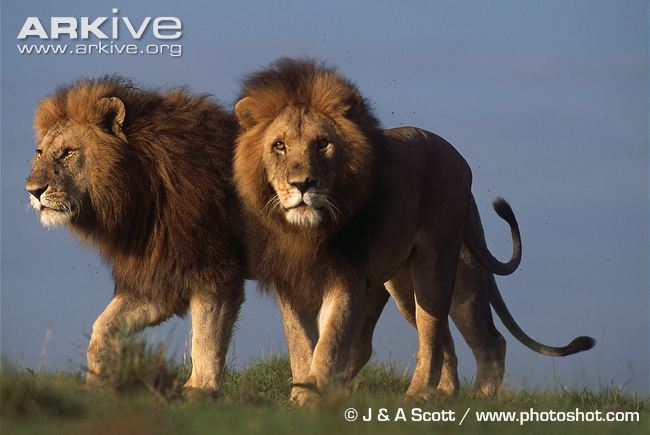
 Two-African-lions

Whether they are trying to stop the killing of wolves in Idaho or lions in Tanzania, conservation biologists often come to a horrible moment when they realize that all their training has missed the mark. “I often think that I have three degrees in wildlife biology, and none of them is relevant to what I do on a daily basis,” says Amy J. Dickman, a senior research fellow at Oxford University. What she needs, more often than not, isn’t ecology. It’s psychology.

That thought occurred especially during two years she spent camped under a tree with two Tanzanian assistants, trying to make contact with a community of pastoral grazers, members of the Barabaig tribe. She was working on strategies to protect predators on the outskirts of Ruaha National Park. It’s Tanzania’s largest national park, as big as the state of New Jersey. It’s home to 10 percent of…

View original post 742 more words

Unknown's avatar

Doing Dumb Things With Black Mambas

“… in black mamba country… a rat in your bed can be reasonably good news.”

Richard Conniff's avatarstrange behaviors

(Photo: Getty Images) (Photo: Getty Images)

Last weekend, I left my rental car parked overnight in a remote location in northern South Africa, where I have been working on a story. When I got back to the car the following afternoon, there was a freshly shed snakeskin on the ground by the rear bumper.  The biologist I was with (OK, he was a mammals guy) examined the head and ventured, “It could be a young black mamba.”

I contemplated that as I drove for the next four hours south to Pretoria. Off and on, I wondered whether the snake had sought shelter, as animals sometimes do, in the engine compartment of the car. In case you’ve somehow never heard of black mambas, they are among the deadliest snakes in the world and can grow to 15 feet in length. They generally use their considerable speed to escape rather than to attack, but they…

View original post 655 more words

Unknown's avatar

Animal “Protection” Groups Doing Little to Protect African Elephants

“Animal rights groups heavy on anti-hunting rhetoric, but light on integrity and conservation.” ~Andrew Wyatt

firstforwildlife's avatarFirst For Hunters

New Report Shows Animal Rights Hypocrites Stiff Elephants, African Communities

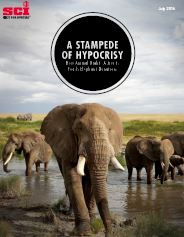
Washington, D.C. — Today Safari Club International (SCI) exposed the hypocrisy of five animal rights groups in a new report. The report, “A Stampede of Hypocrisy: How Animal Rights Activists Poach Elephant Donations,” counters the high-profile propaganda campaign against the sustainable and highly regulated hunting of African elephants, which activists use to push their radical political agenda. Despite the trumpeting from these activists that they’re “speaking for” the interests of elephants, the report points to figures showing the millions of dollars contributed by hunters to African communities and anti-poaching efforts dwarfs the paltry expenditures by the animal rights groups in sub-Saharan Africa. View the report here:

Stampede of Hypocrisy

 View the Full Report HERE

The Humane Society of the United States (HSUS), its affiliate Humane Society International (HSI), the International Fund for Animal Welfare (IFAW), People for the Ethical Treatment of Animals…

View original post 410 more words

Unknown's avatar

Maintaining the Genetic Diversity of Small Populations

“Conservation through captive breeding… Fossil Rim walks the conservation talk!” ~ Andrew Wyatt

Tye Chandler's avatarWords On Wildlife

When you visit Fossil Rim and see babies (calves, cubs, pups and chicks), your first reaction may be to comment on how cute they are or the large number of offspring that we have. One of Fossil Rim’s main roles is being a breeding center – to produce large numbers of endangered species with the aim of securing an insurance population against extinction and directly or indirectly supporting the in situ (in the wild) populations, whether through reintroductions, research or public education. While Fossil Rim works to provide excellent care for our animals, there is an additional component you may not have considered before – caring for the genetic health of our species.

RS27730_hartmanns 045 Hartmann’s mountain zebra

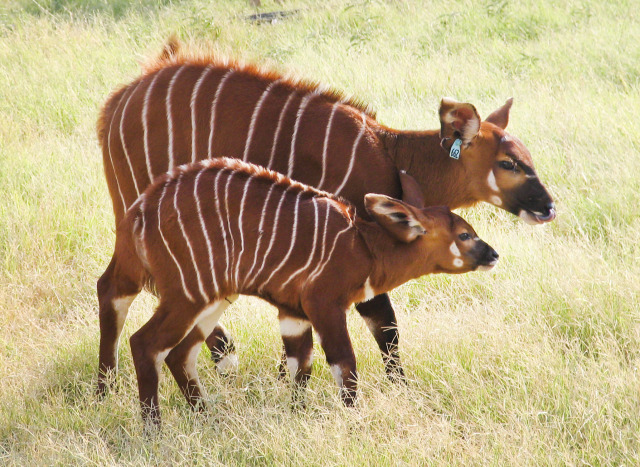
RS26453_bongo calf 11 Bongo

RS20119_IMG_3104 Wildebeest

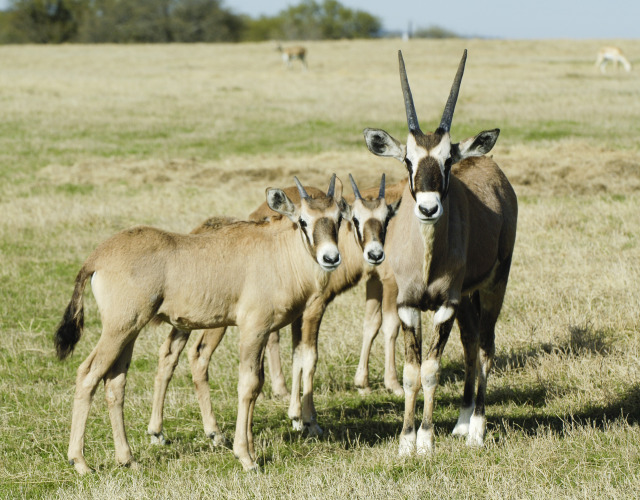
RS11803__DO31104 Gemsbok

RS21921_055 White rhino

Most people are aware that inbreeding animals can lead to numerous health problems, but caring for our animals’ genetics goes beyond just avoiding inbreeding. We seek to maintain genetically…

View original post 447 more words

Unknown's avatar

Satao – the legacy

“Fortunately, being past his breeding prime, Satao likely already passed on his ‘big tusker’ genes many times over before he fell victim to the poachers poison arrow.” ~ Andrew Wyatt

Mark Deeble's avatarMark Deeble

Satao - plain legacy

It’s been months since I was in the ‘hot-box’. The unseasonal rain that scattered Tsavo’s elephants has passed and we have seen the return of the dry season winds. In the past few weeks, they’ve wicked the moisture from the surface of the soil and the grasses have brown-withered. The days of plenty are over. Elephants can no longer rely on the seasonal waterholes and wallows, and are returning to permanent water.

In my absence, the steel filming hide we call the ‘hot-box’ had become a ‘wet-box’ – it had been submerged for months. We spent the first hour of the day bucketing out a ton of anaerobic sludge. I spent the hours afterwards, evicting toads and giant centipedes that had sought refuge in the gloomy, fetid interior.

Last year, I spent several weeks confined underground in it. In all that time, I never saw as many elephants as I…

View original post 1,293 more words